Travel to Korea – Kimchi School

Other than Nami Island, Kimchi School is also another must-go place in the tour of South Korea.

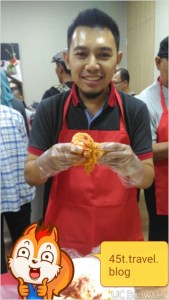
Day 3, at Kimchi School, we got to experience Kimchi making session, which was taught by a Korean gentlemen in Korean. Our tour guide was standing next to him, helping him to translate his speech into English.

tmpdoodle1480974989120

My wife were so excited attending their very first culinary class. After watching the teacher’s demonstration on making kimchi, it was our turn putting chili paste in between every piece of cabbages, and then wrapping it around.

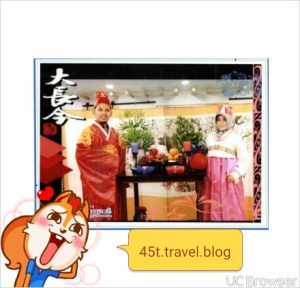
After the Kimchi making session, at the same place, we were allowed to wear Hanbok,  for the photographing session.

tmpdoodle1480975340980

None of us brought back the kimchi that we made. We left it there, and it would be packed and given to the nearby orphanage home later.

Travel to Korea – Mt Sorak

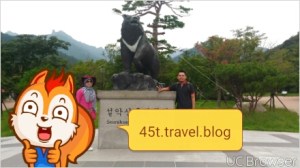
Seoraksan is the highest mountain in the Taebaek mountain range in the Gangwon Province in eastern South Korea. It is located in a national park near the city of Sokcho. After the Hallasan volcano on Jeju Island and Jirisan in the south, Seoraksan is the third highest mountain in South Korea. The Daechongbong Peak (대청봉) of Seoraksan reaches 1,708 meters (5,603 feet). The Taebaek mountain chain is often considered the backbone of the Korean peninsula.

tmpdoodle1480974732159

The national park attracts many national and international tourists all year round, but the main season for Seoraksan national park is autumn. The autumn colours in the area are considered amongst the most beautiful in Korea. The red and yellow forest is interrupted by rocks and small mountain streams flow amidst this. During the rainy season in summer—especially after a typhoon—these streams can swell.


Perhaps the most visited part of the mountain is the main entrance valley to the National Park, a fifteen-minute drive from Sokcho city. The valley runs west to east with a paved road leading up to the park’s entrance gate. This valley contains many beautiful sites and is well worth a day visit.


The Yukdam waterfall and the Biryeong waterfall (비룡폭포) are located on the left side of the valley, about a forty-minute walk from the main car park. Ulsanbawi (울산바위) is a rock formation in the Seoraksan national park. The shape of Ulsanbawi is unique in the area. To reach the rocks you need to follow a hiking path and climb over 800 steps (it is actually 888 steps according to locals). On the way there, there are two temples and a spherical rock (Heundeulbawi, 흔들바위) which is located on top of a larger rock. This rock is about 5 meters (16 feet) high and can be moved with some effort. Thousands of people have already tried to push down Heundeulbawi, but nobody gets further than waggling the rock.


According to the legend Ulsanbawi comes from the city of Ulsan in the south east of Korea. As Kumgangsan (금강산) was built, Ulsanbawi walked to the north as the representative of the city. Unfortunately Ulsanbawi arrived too late and there was no more room. Ulsanbawi was ashamed and slowly trudged back to the south. One evening the rock went to sleep in the Seorak area. Ulsanbawi felt it was so beautiful around there that it decided to stay for good.


At the end of the main valley is Biseondae, a rock platform in a stream. Above the stream is a difficult to reach cave, which offers clear views of the surrounding rock formations.


A bit farther from the entrance is the Valley of a Thousand Buddhas (천불동계곡), the primary valley of Seorak Mountain, also sometimes referred to as Seorak Valley. The valley was so named because the rock formations that line its sides resemble a line-up of Buddha statues.

Travel to Korea – Nami Island

Nami Island is an oasis for culture and leisure in peaceful harmony with humanity and nature. After a five-minute ferry ride, guests meet a forest of verdant trees holding up the sky and open grassy areas where ostriches, rabbits, squirrels, chipmunks, ducks and peacocks warmly welcome visitors in the midst of wild flowers. On Nami Island, artists from all over the world show-off their talents and share the sense of peace of mind the island creates. The island is the site of Nami Island International Children’s Book Festival (NAMBOOK) and other cultural events that take place every weekend, making Nami one of the main cultural and artistic tourist attractions in Korea. In 2006, Nami Island declared its cultural independence and was reborn as Naminara Republic. It has its own national flag, anthem, currency, passport and phone cards, stamps, orthography and even a certification of citizenship.

tmpdoodle1480974196987

Nami is home to several galleries and is the site of the Song Museum, which also houses a collection of international ethnic musical instruments(liuseum). There are indoor and outdoor stages, facilities for seminars and workshops in addition to a 46-room Naminara national hotel and 10 cottages. Nami Island is dedicated to improving the mental and physical well being of children throughout the world. As such, it serves as the main sponsor of the Hans Christian Andersen Award and contributes regularly to UNICEF. Since 2013 it has sponsored the Nami Island International Picture Book Illustration Concours.


Naminara is unique in other ways, also. At night, all the lights are turned off on the island so that visitors can harmonize with nature under the light of the moon and stars. Most of the paper waste and bottles used by visitors to the island are recycled and re-used. Naminara has a very open hiring and retirement policy so people can work until they are 80 years old if they wish.


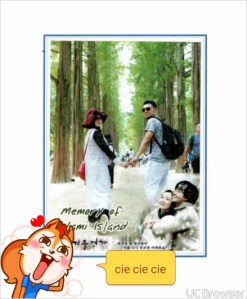
The island, especially the Metasequoia path, was one of the main filming locations of the Korean Broadcasting System 2002 television drama series Winter Sonata, starring Bae Yong-joon and Choi Ji-woo. It attracted 270,000 Korean and foreign visitors in 2001. After it was featured in the drama, it attracted 650,000 visitors in 2002. Since then the number of visitors has continued to grow, reaching 2.3 million in 2012 and 3 million in 2014.[

http://bdv.bidvertiser.com/BidVertiser.dbm?pid=752502&bid=1854870

Travel to South Korea

This was my first time to travel in Korea, i really excited and i decided to write it on this blog.

South Korea ( listen), officially the Republic of Korea (ROK), is a sovereign state in East Asia, constituting the southern part of the Korean Peninsula.

Highly urbanized at 92%, South Koreans lead a distinctive urban lifestyle; half of them live in high-rises concentrated in the Seoul Capital Area with 25 million residents and the world’s sixth leading global city  with the fourth largest economy and seventh most sustainable city in the world.

The earliest Korean pottery dates to 8000 BC, with three kingdoms flourishing in the 1st century BC. The name Korea is derived from one of them, Goguryeo, also known as Koryŏ, which was a powerful empire and one of the great powers in East Asia, ruling Northeast China, parts of Russia and Inner Mongolia, and more than two-thirds of the Korean Peninsula under Gwanggaeto the Great. Since their unification into Later Silla and Balhae in the 7th century, Korea enjoyed over a millennium of relative tranquility under long lasting dynasties, with innovations like Hangul, the unique alphabet created by Sejong the Great in 1446, enabling anyone to easily learn to read and write. Its rich and vibrant culture left 17 UNESCO Intangible Cultural Heritages of Humanity, the third largest in the world, along with 12 World Heritage Sites. Annexed by Imperial Japan in 1910 due to its strategic and central location, Korea was divided into North and South after its surrender in 1945. A North Korean invasion led to the Korean War (1950–53). Peace has since mostly continued with the two agreeing to work peacefully for reunification and the South solidifying peace as a regional power with the world’s 10th largest defence budget.

South Korea’s tiger economy soared at an annual average of 10% for over 30 years in a period of rapid transformation called the Miracle on the Han River. A long legacy of openness and focus in innovation made it successful.[27] Today, it is the world’s fifth largest exporter and seventh largest importer with the G20’s largest budget surplus and highest credit rating of any country in East Asia. It has free trade agreements with 75% of the world economy and is the only G20 nation trading freely with China, the US and EU simultaneously. In 1987, it became a multi-party democracy with universal suffrage and is today Asia’s most advanced democracy with high government transparency, universal healthcare and freedom of religion. High civil liberties led to the rise of a globally influential pop culture such as K-pop and K-drama, a phenomenon called the Korean Wave, known for its distinctive fashionable and trendy style. Home of the UN Green Climate Fund and GGGI, South Korea is a leader in low carbon green growth, committed to helping developing countries as a major DAC and Paris Club contributor. It is the OECD’s most welcoming country by visa-free entry to foreigners and rated highly in peaceful tolerance and inclusion of minorities. (Wikipedia)